Find a Real Amazon Bin Store Near You Without the Guesswork
We manually verify addresses, hours, and restock days so you don’t drive out to a store that’s already closed. No fake listings, no outdated Google Maps pins, just bin stores that are actually open right now.
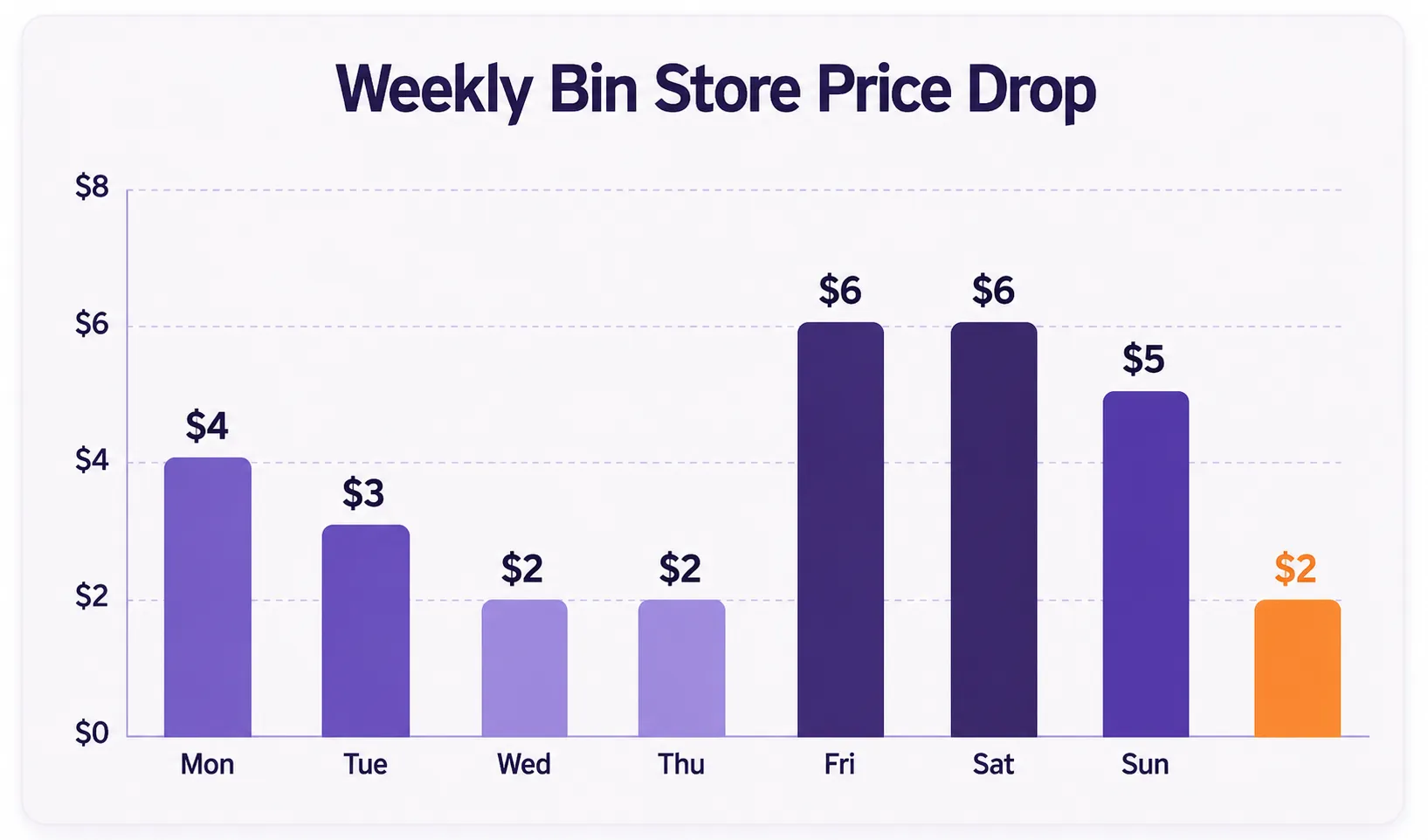
An Amazon bin store is an independently owned store that sells Amazon customer returns and overstock in bulk bins, at prices that drop daily until the next restock, usually Monday’s full price down to $1–$5 by Sunday. It is not operated or endorsed by Amazon.
What Is an Amazon Bin Store?
An Amazon bin store is a physical retail location that sells customer returns, overstock, and shelf-pulls originally sent back to Amazon. Instead of restocking every returned item, Amazon sells pallets of this merchandise in bulk to liquidators, who then resell it to the public, usually piled into large bins, at a fraction of the retail price.
No Shelves. No Order. Just Digging.
You won’t find neat shelves here. Items are mixed, unsorted, and sold “as-is,” which is exactly why shoppers love digging through them: every visit is different, and the deals can be huge.
Find Amazon Bin Stores Near You
Enter your zip code to see verified bin stores sorted by distance, plotted on a live map. Store hours, restock days, and inventory type can vary a lot between locations, so always check for updated info before you drive out.
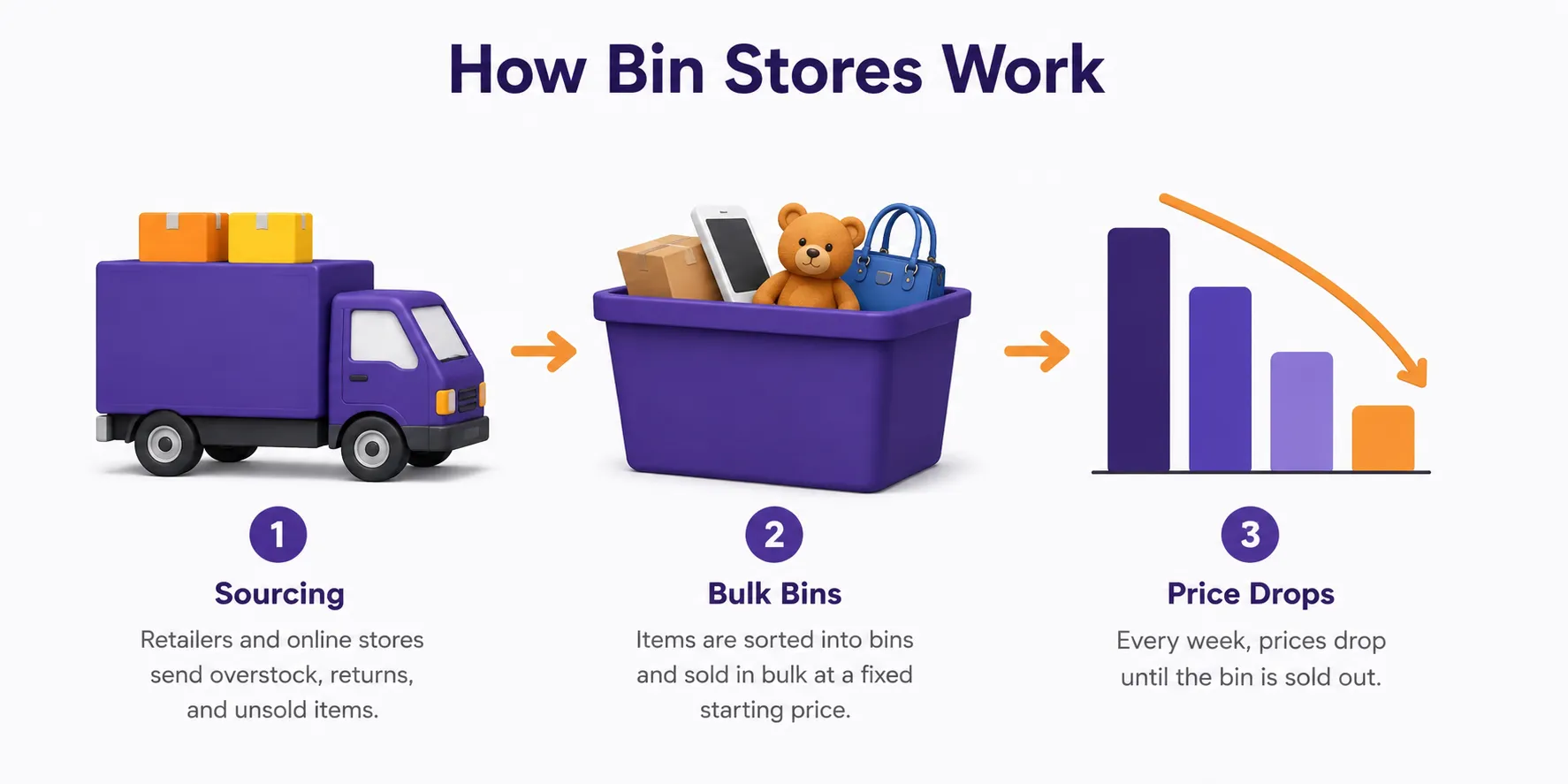
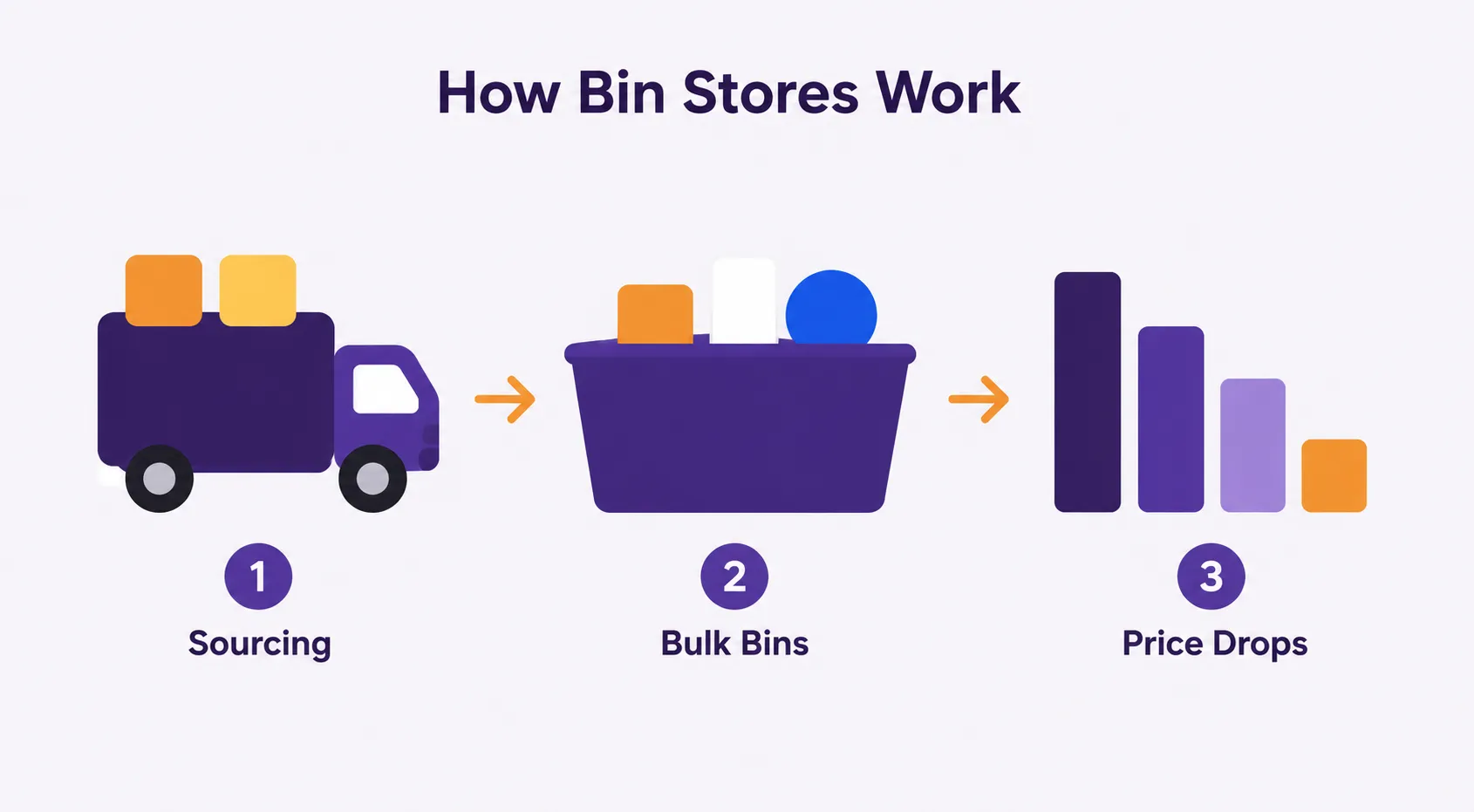
How an Amazon Bin Store Actually Works
Bin store prices follow a weekly cycle: highest right after Monday’s restock, dropping daily, and bottoming out around $1–$5 per item by Sunday. Shop early in the week for selection, late in the week for the lowest prices.
Inventory Sourcing
Returns and shelf-pulls are bought in bulk pallets from liquidators, sight-unseen, so even the store doesn’t fully know what’s inside.
Bulk Purchase
Stores buy pallets, not single items, then dump the contents into bins for shoppers to dig through as-is.
Daily Price Drops
Prices start high on restock day and drop every day until the next pallet arrives, see the full cycle below.
Is It a Real Amazon Bin Store? How to Spot Fakes and Scams
Amazon does not run or officially license any bin store. A store is likely untrustworthy if it has no physical address, guarantees “brand new” items, or has no posted return policy, legitimate bin stores are upfront that everything is sold as-is.
Not every store claiming to sell “Amazon returns” actually has a relationship with Amazon, Amazon doesn’t run these stores directly or officially license the name. Watch for these red flags:
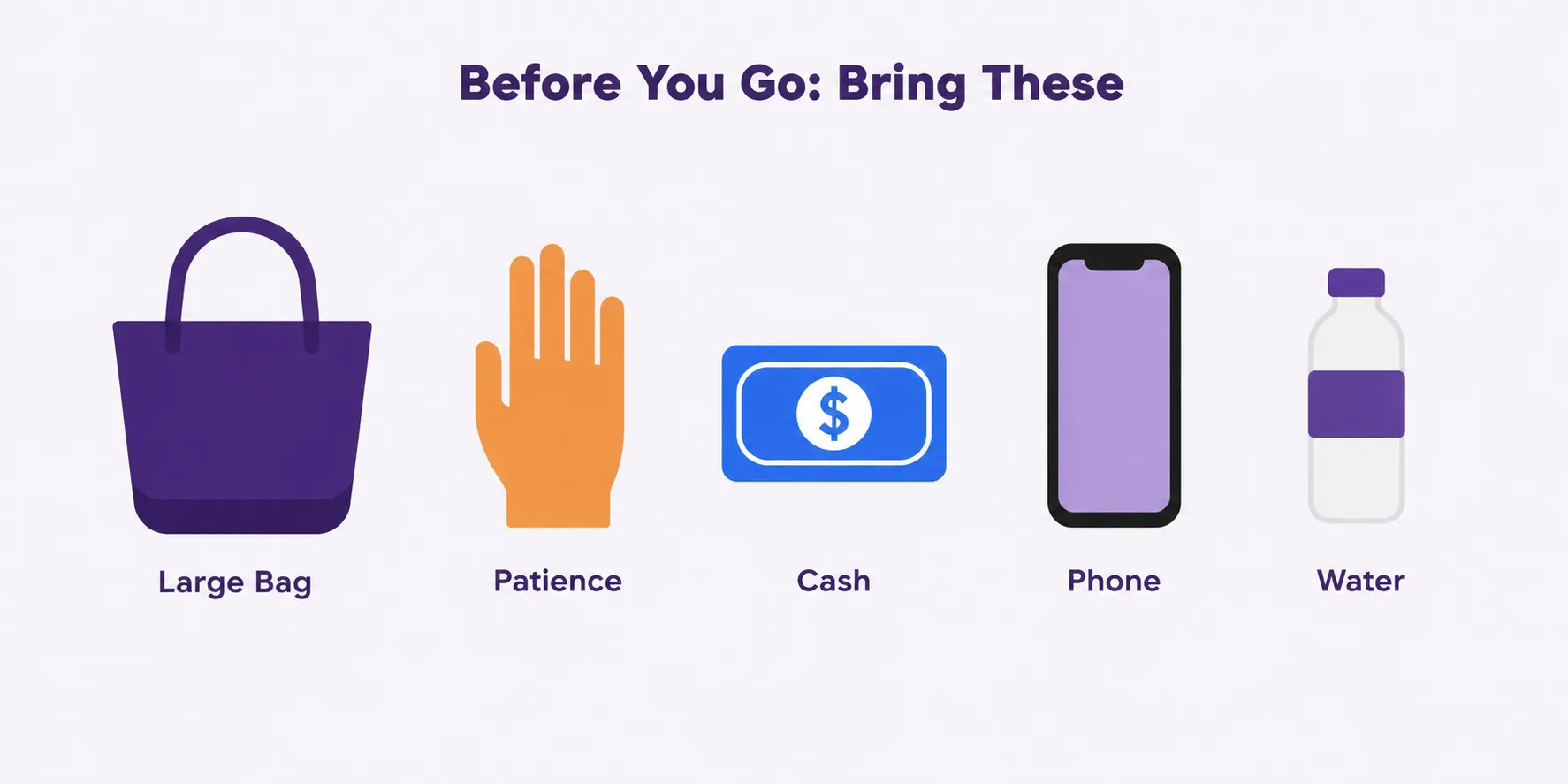
What to Bring: Bin Store Shopping Checklist
Bin Store Etiquette (Read Before You Go)
What Can You Actually Find in an Amazon Bin Store?
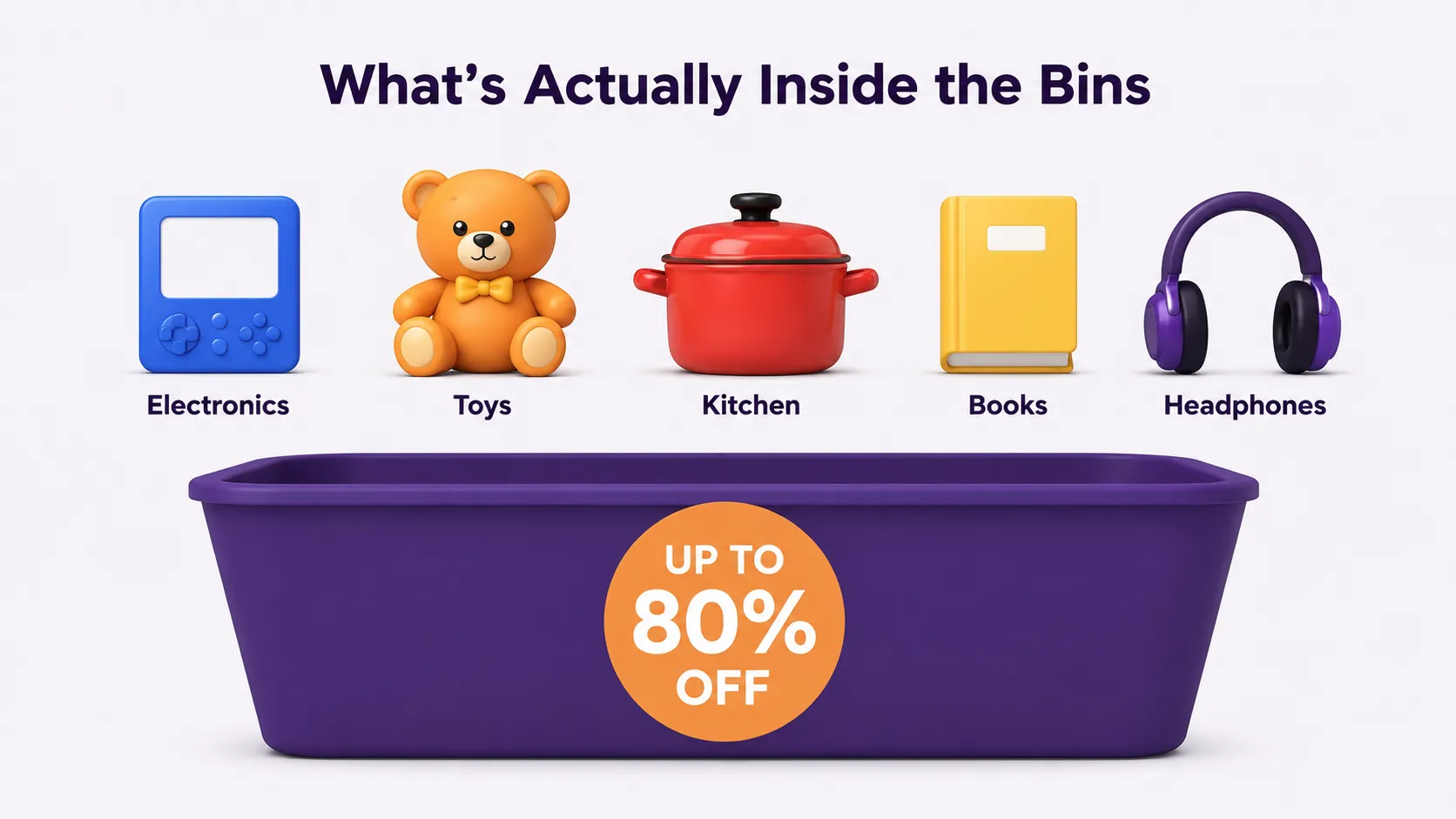
Inventory is completely random, but shoppers commonly report finding:
Amazon Bin Store vs. Goodwill Outlet vs. Other Liquidation Stores
| Feature | Amazon Bin Store | Goodwill Outlet | General Liquidation |
|---|---|---|---|
| Source of goods | Amazon returns/overstock | Donated goods | Mixed retailer overstock |
| Pricing model | Weekly price-drop cycle | Sold by the pound | Fixed discount tags |
| Item condition | New to damaged/returned | Used, donated | New/shelf-pull, mixed |
| Best for | Electronics, sealed goods | Clothing, books, houseware | Broad general merchandise |
Newly Added Bin Stores
Store Name Here
Store Name Here
Store Name Here
Holiday & Seasonal Bin Store Sales (2026)
Bin stores often run special sales around major shopping holidays, Black Friday, Christmas, and Halloween tend to bring extra inventory and deeper discounts as stores clear space for new pallets. Around these dates:
Other Ways to Buy, and Sell, Liquidation Goods
Buying Amazon Liquidation Online vs. In-Store
If there’s no bin store near you, online liquidation marketplaces let you buy sealed pallets or manifested lots shipped to your door. It’s a higher upfront cost with less randomness than a physical bin store, and popular among resellers who want manifest lists before bidding.
Can You Resell Bin Store Finds?
Yes, reselling is one of the biggest reasons people shop bin stores. Flippers commonly resell electronics, sealed toys, and branded items on eBay, Poshmark, and Facebook Marketplace.
- Test electronics before buying if allowed
- Know current resale prices before committing
- Factor in your time for sorting and listing
- Start small until you learn what moves fast locally
Thinking of Starting Your Own Bin Store?
Some visitors aren’t just shoppers, they’re exploring opening a bin store themselves. In short, it works by sourcing liquidation pallets from wholesalers or auction platforms, renting a retail space, and pricing inventory on a rotating discount cycle like the one shown above.
Sourcing Beats Any Single “Hot” Pallet
Startup costs mainly go toward pallet sourcing, rent, and shelving/bins, margins depend heavily on how well you price and rotate stock. Success depends more on consistent sourcing relationships than on any one lucky find.
Best Time to Visit an Amazon Bin Store
Frequently Asked Questions
Is an Amazon bin store affiliated with Amazon?
No. Bin stores are independently owned businesses that buy liquidated Amazon inventory from third-party liquidators.
Are Amazon bin stores worth it?
For shoppers who enjoy digging and don’t mind unpredictable inventory, yes, the discounts can be significant.
Can you return items bought at a bin store?
Almost never. Purchases are typically final sale, sold as-is with no warranty.
How often do bin stores restock?
Most restock weekly, commonly early in the week, though this varies by location.
Where do Amazon returns go before reaching a bin store?
Returned items are typically sorted at Amazon’s returns centers, then sold in bulk pallets to liquidation wholesalers, who resell them to bin store owners.
Can I start my own Amazon bin store?
Yes, it requires sourcing liquidation pallets from a wholesaler, securing retail space, and setting up a rotating pricing system.
Why Trust This Directory
We’re a small team that manually tracks and verifies Amazon bin store locations across the U.S., checking hours, addresses, and closures so shoppers don’t waste a trip. We update this directory regularly and rely on shopper reports to keep listings accurate.